
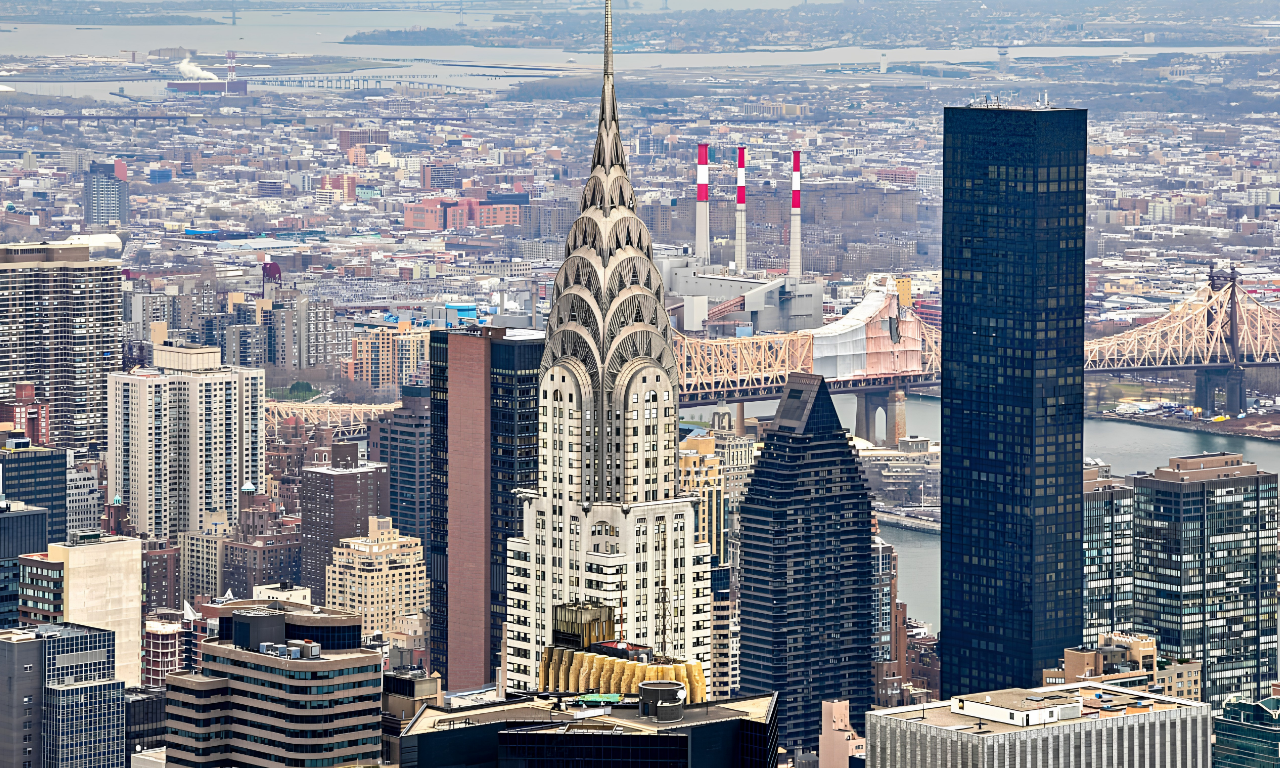
For a brief moment, it was the tallest building in the world. Nearly a century later, it remains one of the most beautiful.
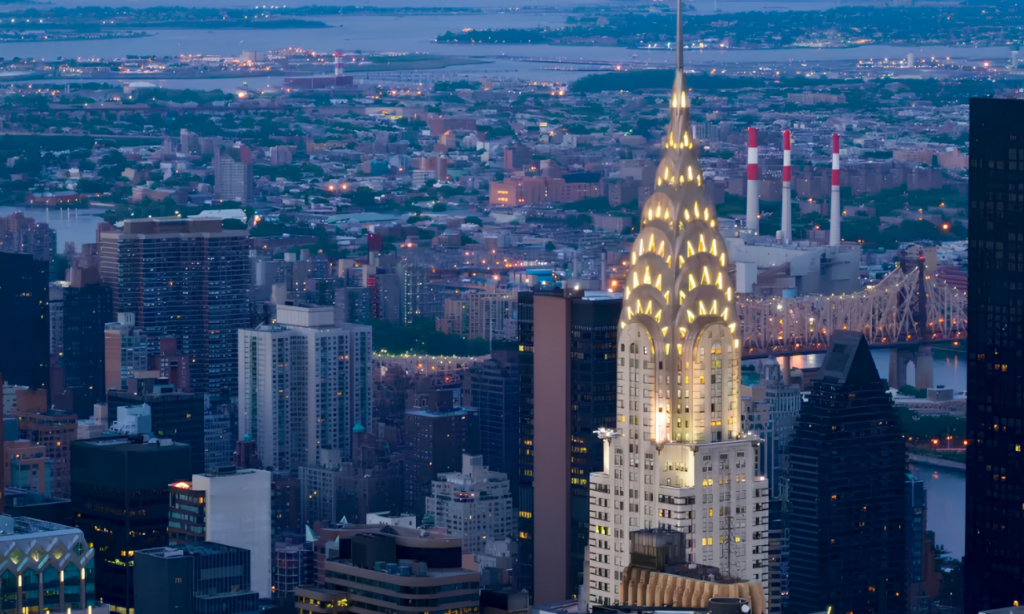
A Dream Built in Steel and Ambition
There are skyscrapers that dominate city skylines, and then there are buildings that capture the imagination of generations. The Chrysler Building belongs firmly in the second category.
Standing proudly in the heart of Manhattan, this shimmering Art Deco masterpiece is more than an office tower. It is a symbol of hope, innovation, and the glamorous spirit of the Roaring Twenties.
At a time when America believed anything was possible, architects dreamed bigger, businesses grew faster, and New York City reached toward the sky. Out of that extraordinary era emerged a building that would become one of the greatest architectural achievements of the twentieth century.
Even today, visitors often stop in their tracks when they first catch sight of its dazzling stainless steel crown rising above the city.
The Chrysler Building isn’t simply admired.
It is loved.
The Roaring Twenties: A City Reaching for the Sky
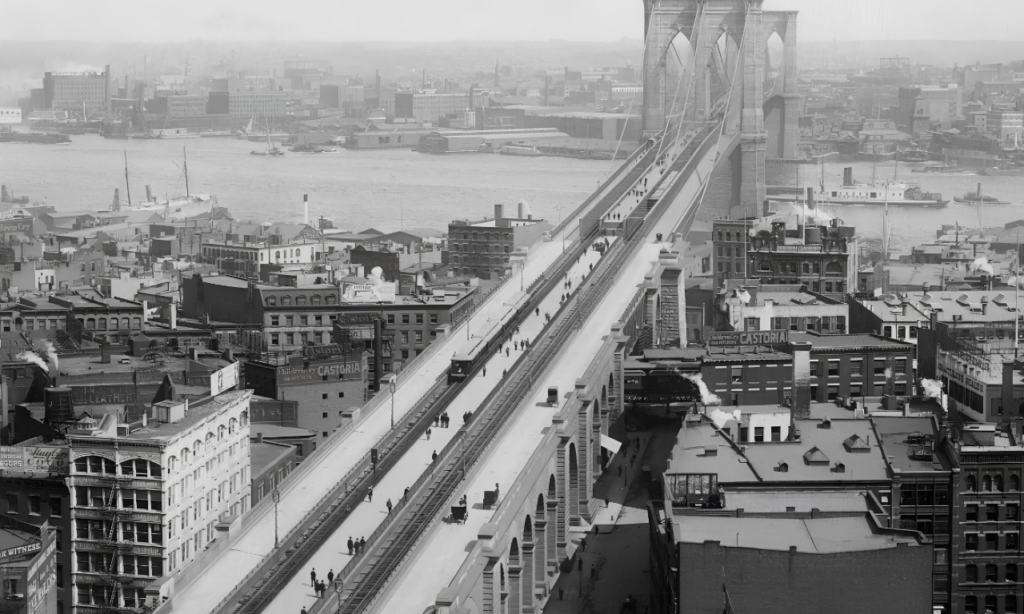
The 1920s were unlike any decade before them.
Jazz music echoed through crowded clubs. Automobiles changed everyday life. Women embraced new freedoms. Cinema became a cultural phenomenon. Technology advanced at astonishing speed.
New York City became the beating heart of this transformation.
Developers competed fiercely to build taller and more impressive skyscrapers that reflected the confidence and excitement of modern America. Architecture itself evolved to match this new spirit.
Gone were the heavy classical styles of previous generations.
In their place emerged Art Deco, a movement defined by bold geometry, elegant ornamentation, luxurious materials, and celebration of progress.
No building embodied these ideals more completely than the Chrysler Building.
Walter Chrysler’s Vision
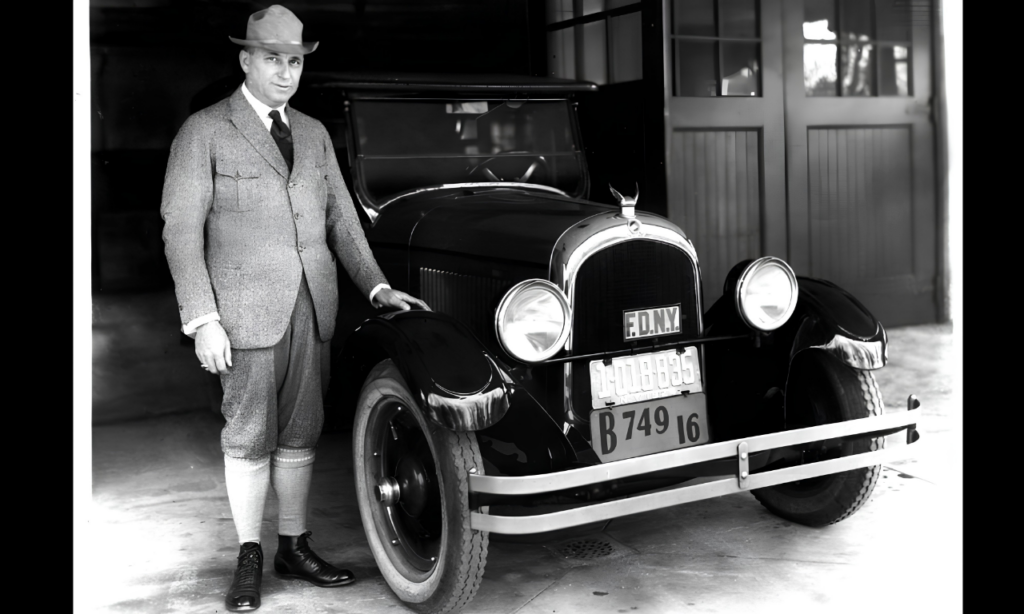
The story begins with Walter Percy Chrysler, founder of the Chrysler Corporation.
Born into modest circumstances, Chrysler worked his way up through determination and talent to become one of America’s most successful industrialists. By the late 1920s, he wanted to create something extraordinary.
Unlike many corporate headquarters, the Chrysler Building was not built for shareholders.
It was built for him.
He privately financed the entire project and intended it to serve as a lasting monument to ambition, craftsmanship, and American achievement.
For Walter Chrysler, this wasn’t merely real estate.
It was legacy.
William Van Alen: The Architect Who Dared to Dream
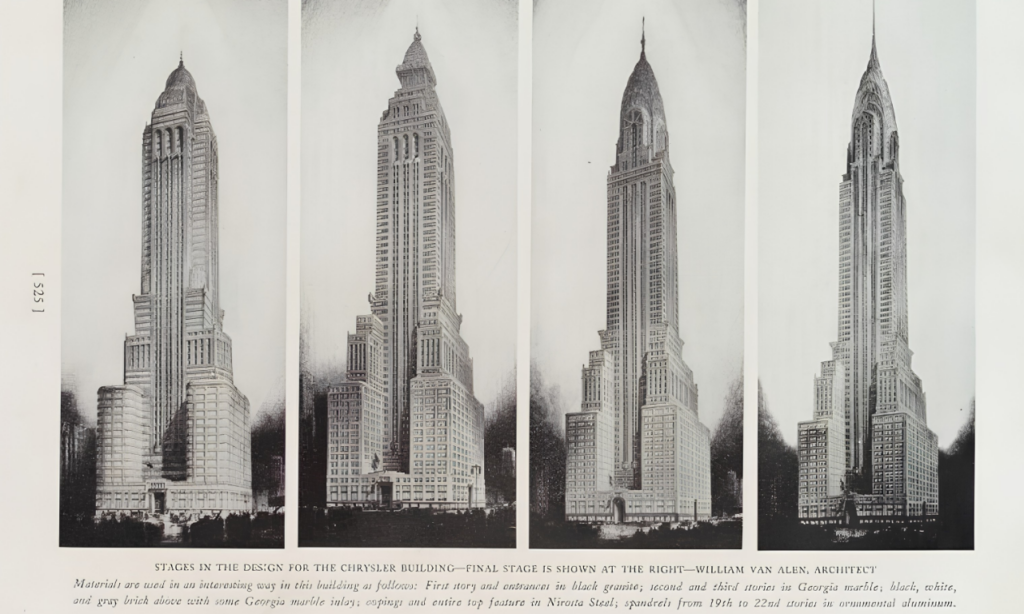
To bring this dream to life, Chrysler hired architect William Van Alen.
Van Alen wasn’t afraid of innovation. He believed architecture should inspire emotion and excitement. Instead of creating another ordinary skyscraper, he designed a building unlike anything New York had ever seen.
Its setbacks created dramatic upward movement.
Its decorative elements celebrated modern industry.
Its crown shimmered like sunlight reflecting off polished metal.
The design was futuristic yet elegant.
Practical yet poetic.
It represented the very soul of Art Deco.
The Secret Race for the World’s Tallest Building
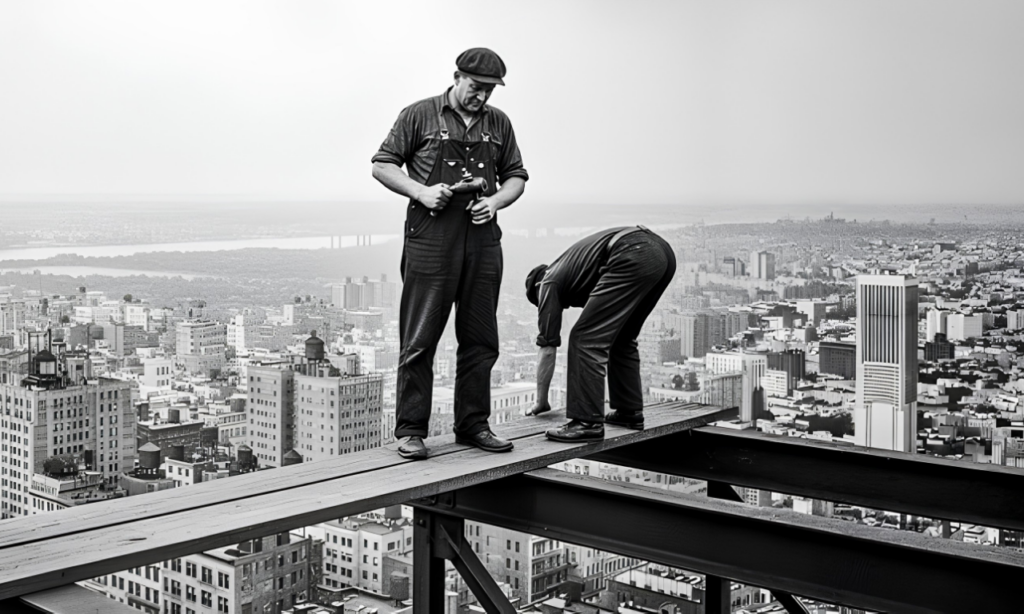
During construction, New York was caught in an extraordinary competition.
Developers were obsessed with one title:
The tallest building in the world.
The Chrysler Building faced fierce rivalry from 40 Wall Street.
As competing projects repeatedly revised their heights, Van Alen developed a daring plan.
Unknown to competitors and even many workers, a massive stainless steel spire had been secretly assembled inside the building.
Then came one of architecture’s greatest surprises.
In October 1929, the 185-foot spire was hoisted through the top of the structure in just ninety minutes.
New Yorkers watched in amazement.
Almost overnight, the Chrysler Building claimed the world record at 1,046 feet.
It had won the race.
At least for a while.
The Crown That Changed Architecture Forever
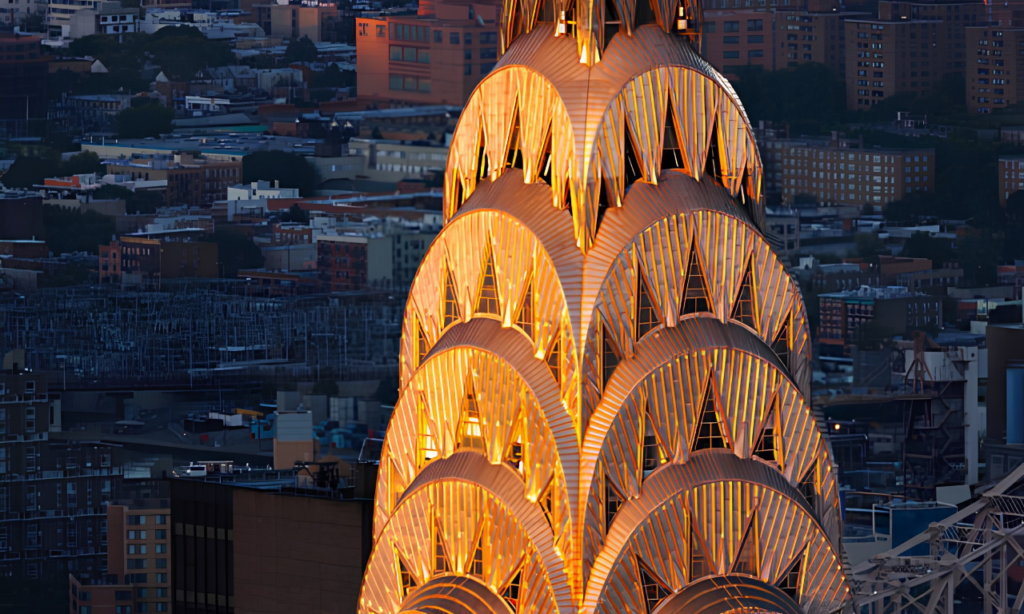
If one feature defines the Chrysler Building, it is undoubtedly its spectacular crown.
Composed of seven radiating stainless steel arches, the crown glitters throughout the day and glows magnificently at night.
Triangular windows punctuate each arch.
Geometric patterns repeat with mathematical precision.
The result feels both futuristic and timeless.
Nearly one hundred years after its completion, architects and historians still regard it as one of the finest examples of Art Deco design ever created.
No modern skyscraper has quite replicated its magic.
Inspired by the Automobile Age
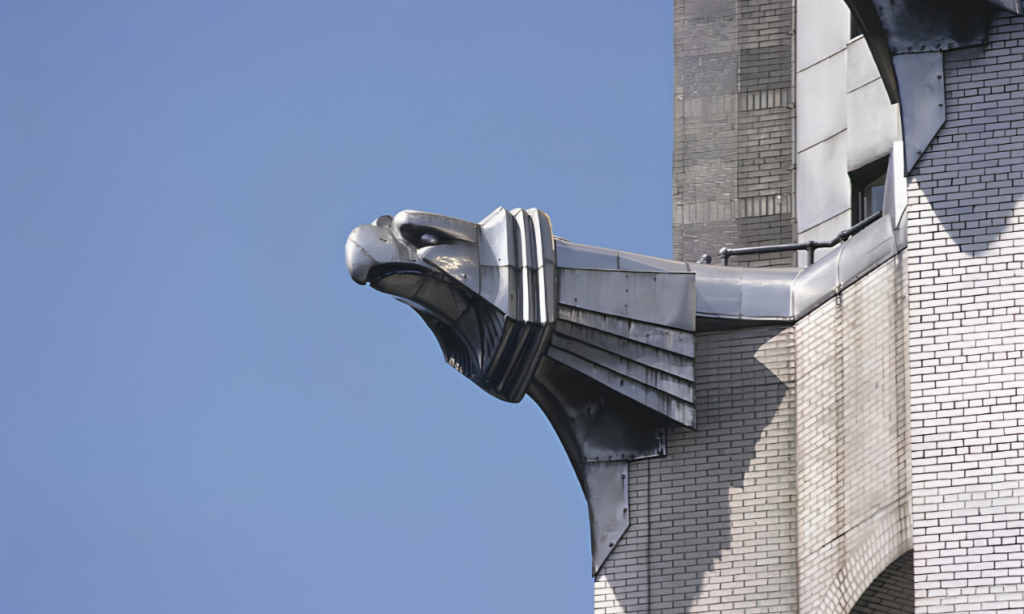
The Chrysler Building paid tribute to the industry that made Walter Chrysler famous.
Decorative eagle gargoyles projected from the corners of the tower.
Stylized radiator caps adorned upper levels.
Wheel-inspired motifs appeared throughout the exterior.
These elements transformed machine components into elegant artistic expressions.
The building celebrated modern technology without sacrificing beauty.
It proved that industry itself could inspire art.
Stepping Inside the Lobby
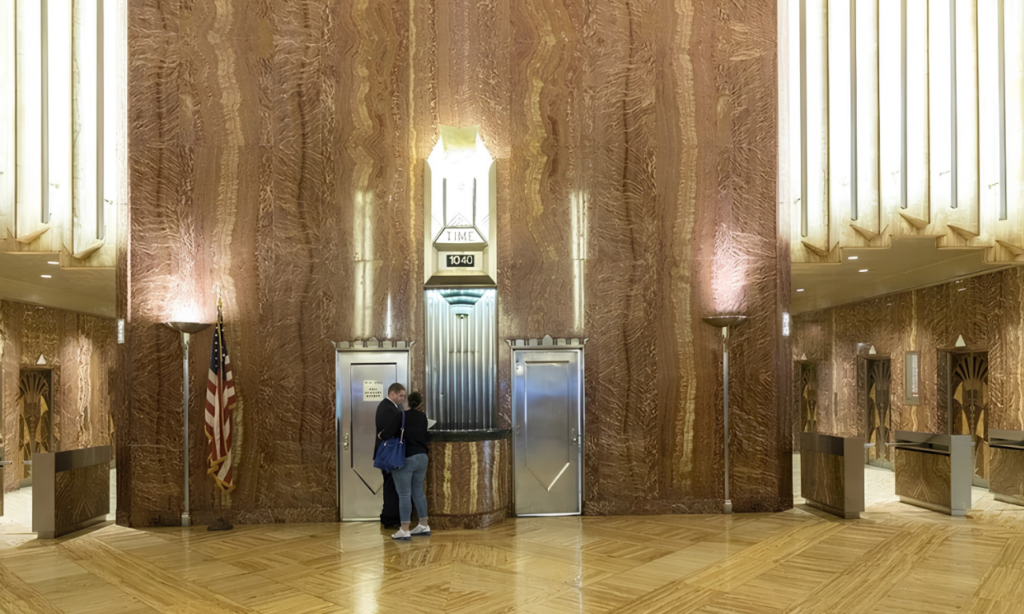
While the exterior captures attention, the interior rewards those lucky enough to step inside.
Visitors entered through bronze and glass doors into a breathtaking lobby filled with rich materials and exquisite craftsmanship.
African marble lined the walls.
Decorative metalwork reflected geometric patterns.
Above, Edward Trumbull’s magnificent mural depicted transportation, industry, and human achievement.
The atmosphere conveyed confidence.
It reminded visitors that they were living in an age of extraordinary possibility.
Losing the Crown, Keeping the Legend
Only eleven months after becoming the tallest building on Earth, the Chrysler Building lost its title to the newly completed Empire State Building.
For many structures, that would have marked the end of their fame.
But not for the Chrysler Building.
Its beauty ensured immortality.
Unlike taller skyscrapers built later, the Chrysler Building possessed something far more valuable.
Character.
It became a favorite among architects, photographers, filmmakers, and travelers.
Generations fell in love with its graceful silhouette and unforgettable crown.
The Chrysler Building in Popular Culture
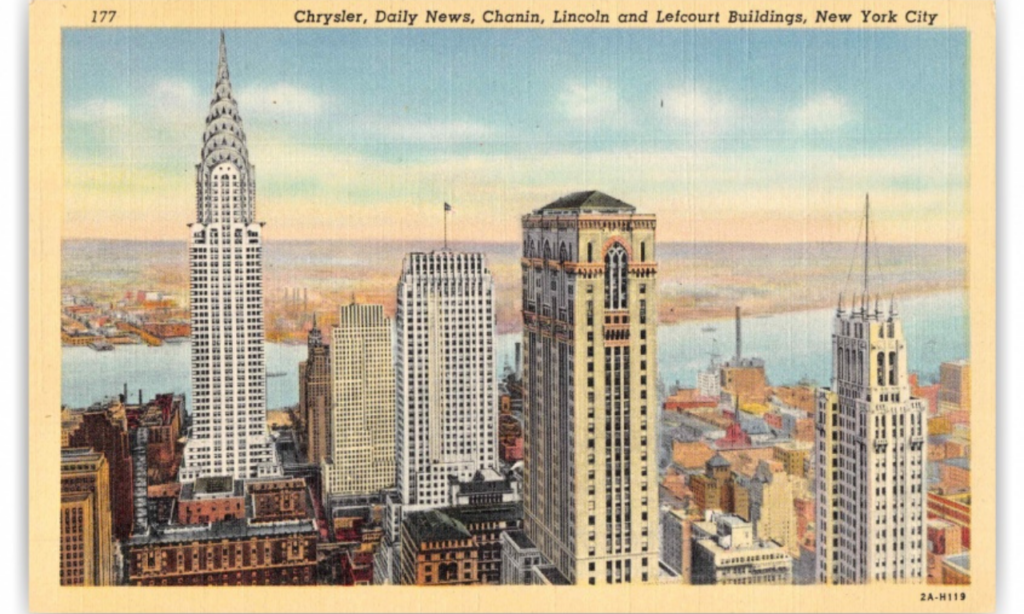
The Chrysler Building has appeared in countless films, books, paintings, postcards, and television programs.
It represents the glamour of old New York.
The optimism of the Jazz Age.
The boldness of American ambition.
Whether viewed from a crowded Manhattan street or from afar across the East River, its presence evokes wonder.
Few buildings achieve such emotional connection with people around the world.
Why the Chrysler Building Still Matters Today
In an age dominated by glass towers and minimalist design, the Chrysler Building reminds us of something important.
Beauty matters.
Details matter.
Craftsmanship matters.
Architecture can uplift the human spirit.
Nearly a century after its completion, this Art Deco icon continues to inspire interior designers, architects, artists, and history lovers alike.
It teaches us that functional buildings can also be works of art.
That innovation and elegance can coexist.
That true style never fades.
A Timeless Symbol of the Art Deco Age
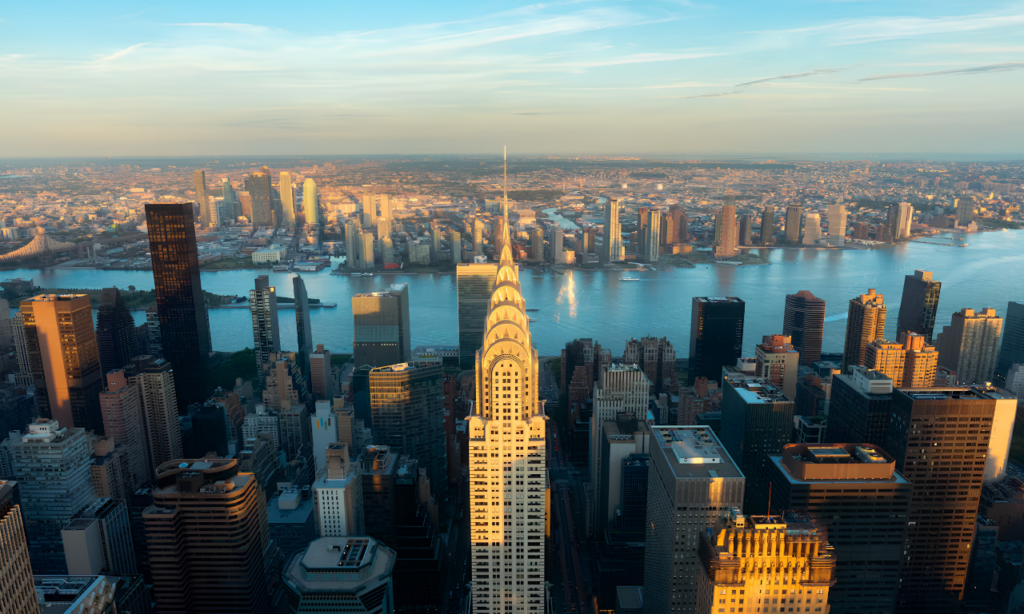
The Chrysler Building was born from competition, ambition, and imagination.
Yet its enduring appeal comes from something deeper.
It captures the hopes of an era that believed the future would be brighter, faster, and more beautiful.
In its shining steel arches and soaring form, we glimpse the dreams of the Roaring Twenties.
And perhaps that is why people continue to look up at it with admiration.
The Chrysler Building is more than an architectural landmark.
It is a celebration of human creativity.
A masterpiece of Art Deco design.
And a reminder that elegance never goes out of style.